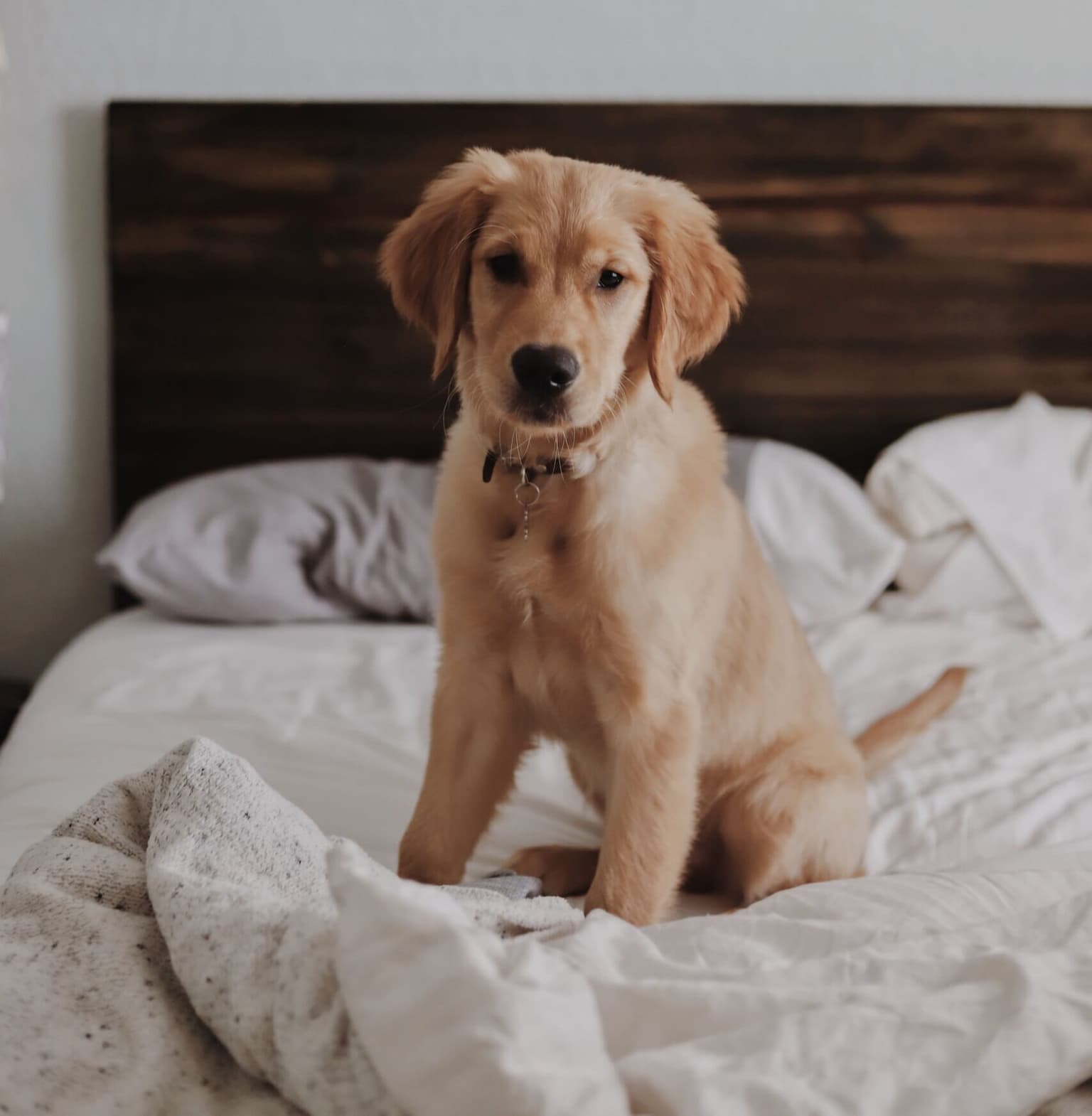
Grovetown is a dog town. Walk through Canterbury Farms or Brookstone on any evening and you will see dogs on every other front porch. The Fort Eisenhower community has an especially high percentage of pet owners — dogs and military families go together. Add in the cats, and you have a lot of pets living on a lot of carpet.
Which means a lot of pet stains. Here is what to do when it happens, what not to do, and when to admit you need professional help.
The first five minutes matter most
When a pet has an accident on carpet, the clock starts immediately. Urine is a liquid, and carpet fiber is not a waterproof barrier. The longer the urine sits, the deeper it soaks — through the fibers, through the backing, and into the pad below. Once it reaches the pad, surface cleaning becomes exponentially less effective.
If you catch it within the first few minutes, here is the best approach:
Blot, do not rub. Grab white paper towels or a clean white cloth. Press firmly into the stain to absorb as much liquid as possible. Work from the edges inward to avoid spreading the stain outward. Rubbing pushes the urine deeper into the fiber and expands the affected area.
Keep blotting. Use fresh towels and keep pressing until no more moisture transfers. You will go through more towels than you expect. That is normal.
Apply cold water. Dampen a clean white cloth with cold water (not hot — heat sets urine proteins) and blot the area again. This dilutes whatever urine remains in the surface fibers.
Apply an enzymatic cleaner. Not carpet shampoo. Not vinegar. Not baking soda. An enzymatic cleaner — the kind sold specifically for pet urine — contains live enzymes that break down the uric acid in the stain. This is the only category of over-the-counter product that addresses the actual chemistry of pet urine rather than just masking or diluting it.
Follow the product directions. Most enzyme cleaners need dwell time. Do not blot them up immediately. Let them sit for the recommended period, then blot dry.
Place a dry white towel over the spot. Weight it down with something heavy and leave it for several hours. This draws out residual moisture from below the surface.
What not to do
Do not use ammonia-based cleaners. Urine contains ammonia compounds. Cleaning a urine stain with an ammonia-based product can actually encourage the pet to return to the same spot because the chemical scent is similar to their own marking.
Do not use bleach. Bleach does not break down uric acid. It will lighten or discolor your carpet dye, giving you a bleach stain on top of a urine stain.
Do not steam clean the area. Steam cleaning uses hot water, and heat bonds urine proteins to carpet fiber permanently. If you are going to have the whole house steam cleaned, make sure pet stain areas are pre-treated with enzymes first — or better yet, use a low-moisture cleaning method that does not rely on hot water.
Do not assume the smell is gone because you cannot smell it. Humans acclimate to odors in their own home. Your nose adjusts after continuous exposure. Visitors can often smell what you have stopped noticing. If you had a significant pet accident, the contamination may be there even if your nose says otherwise.
When DIY is not enough
For a single, fresh accident caught quickly, the blot-and-enzyme approach described above usually handles it. But there are situations where the contamination has gone beyond what surface treatment can fix:
The stain keeps coming back. You clean it, it looks fine for a week, and then on a humid day the smell returns. This means uric acid crystals have formed in the pad below the carpet. They reactivate with moisture. In the Grovetown and Augusta area, where summer humidity stays above seventy percent for months, pad-level contamination produces recurring odor that no amount of surface treatment will resolve.
The pet has been using the same spot for weeks or months. Repeat contamination in one area saturates the pad and can reach the subfloor. The volume of urine that accumulates over multiple accidents exceeds what the carpet fiber can hold, and the majority of it ends up below the surface.
You are moving into a home with mystery odors. Military families PCSing into a Grovetown rental frequently discover pet odor from the previous tenant once the humidity changes. The carpet may look fine because it was steam cleaned before you moved in, but the pad was never treated.
Multiple spots across the house. If you have more than two or three pet stain areas, a patchwork of DIY treatments is less effective and more expensive than having the whole situation assessed professionally.
For these situations, our pet odor and stain removal service uses a UV light to map every contaminated area — including spots not visible to the naked eye — and applies a live-enzyme treatment that reaches the pad where the uric acid crystals live. It is a different service from standard carpet cleaning, targeted specifically at breaking down the chemical compounds that cause recurring odor.
Preventing future accidents
Some prevention strategies that work for Augusta-area pet owners:
Maintain a consistent outdoor schedule. Dogs that go out at predictable intervals have fewer indoor accidents. The heat in Grovetown summers can make long outdoor sessions uncomfortable, but short, regular trips are more effective than infrequent long ones anyway.
Watch for behavioral triggers. Stress, schedule changes (PCS moves are a big one for military dogs), new household members, and medical issues can all increase accident frequency. A sudden change in a house-trained dog's behavior is often medical — worth a vet visit before you blame the training.
Treat existing stain areas with an enzyme cleaner. Pets return to previous accident sites by scent. Even if you cleaned the visible stain, residual scent in the fibers can attract repeat visits. A thorough enzyme treatment — either DIY for fresh spots or professional for established ones — removes the scent marker.
Consider area rugs in high-risk zones. A washable area rug near the back door or in the room where accidents tend to happen protects the carpet underneath and is easier to clean or replace than wall-to-wall carpet.
If the pet stain situation in your home has gotten ahead of you, call 803-310-3848. We will walk through the scope over the phone and tell you what to expect before scheduling anything.