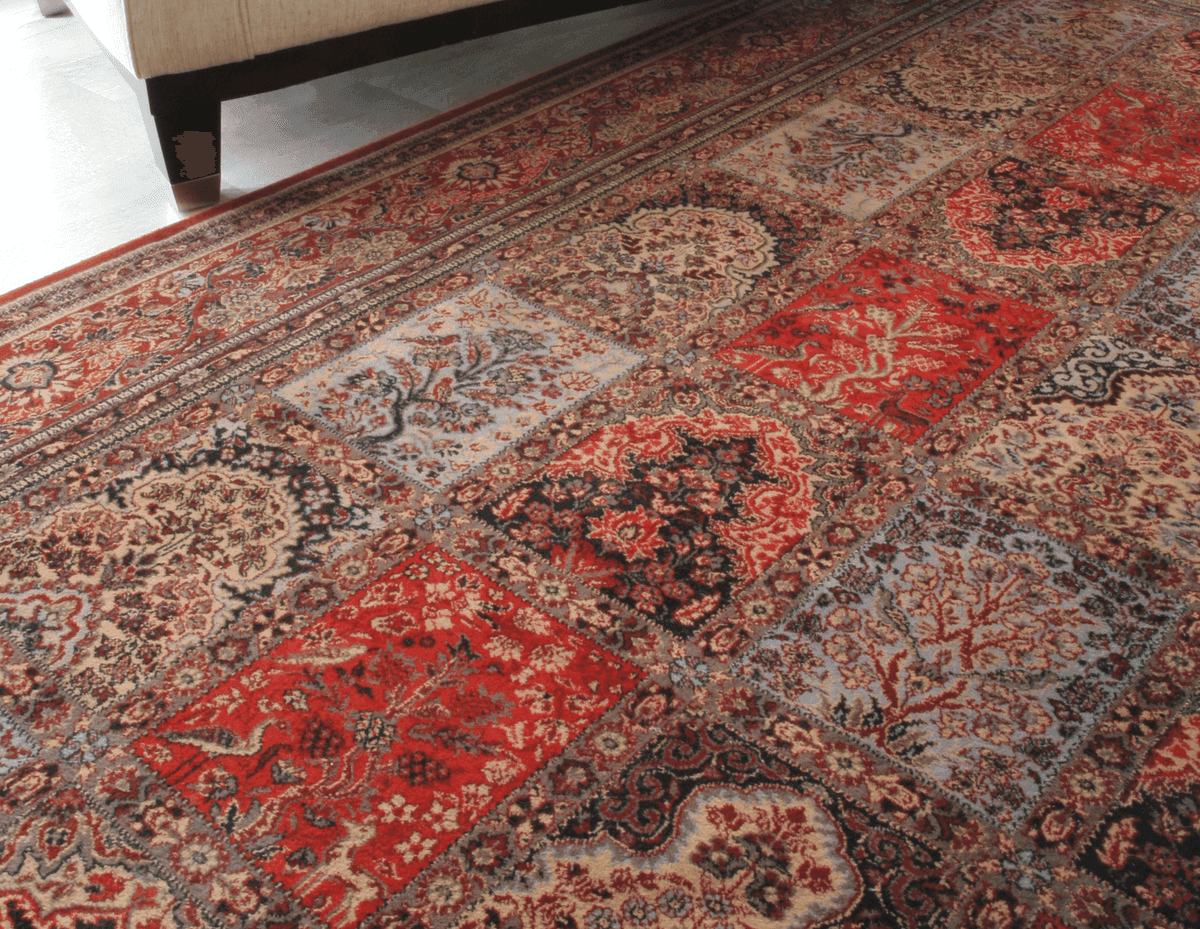
Oriental rugs are not just floor coverings. They are investments, family heirlooms, and in a lot of cases the most expensive textile in the house. Cleaning one requires a different mindset than running a machine over wall-to-wall carpet. The dyes can bleed if you use the wrong pH. The fibers — hand-spun wool, silk, cotton — respond differently to moisture and agitation than machine-made synthetics. And the construction itself, whether hand-knotted, hand-tufted, or flat-woven, dictates how much mechanical action the rug can handle without loosening its structure.
We treat every oriental rug as an individual piece. Before any water or solution touches the fibers, we inspect for fiber composition, dye stability, construction type, and pre-existing wear. That assessment determines exactly how we clean it — not a standardized process applied to every rug that walks through the door.
Why oriental rugs need specialized cleaning
The average area rug from a home goods store is machine-made with synthetic dyes that are locked into the fiber during manufacturing. They are colorfast, uniformly constructed, and tolerant of a wide range of cleaning methods. Oriental rugs are a different animal entirely.
Natural dyes can migrate. Vegetable-based and mineral-based dyes — the kind used in traditional Persian, Turkish, Afghan, and Indian rugs — are beautiful but not always stable when exposed to water. A red dye might bleed into an adjacent cream field. Blue indigo can transfer to lighter areas. Without testing first, a well-intentioned cleaning can permanently alter a rug's appearance.
Handmade construction varies. A hand-knotted Persian rug has a different structure than a hand-tufted Indian rug, which has a different structure than a Kilim flatweave. The knot density, pile height, backing type, and foundation material all affect how the rug should be handled, how much moisture it can tolerate, and what kind of agitation is safe.
Age changes the rules. Antique rugs — anything over fifty years old — often have weakened fibers, thinned foundations, and repairs that may not be immediately visible. Cleaning an antique rug the same way you would clean a twenty-year-old reproduction risks pulling out repairs, breaking fragile fibers, or causing irreversible damage.
The 6-step oriental rug cleaning process
1. Detailed inspection. We examine both sides of the rug. We check the knot structure, identify the fiber type (wool, silk, cotton, or blends), note any pre-existing damage (fraying, moth damage, dry rot, prior repairs), and assess the overall condition. This is not a glance — it is a systematic evaluation that tells us exactly what we are working with.
2. Colorfastness testing. We test dye stability on multiple colors, focusing on edges and corners where dye lots sometimes differ from the center field. If a dye is unstable, we adjust our approach — reducing moisture levels, changing the solution pH, or in some cases recommending plant-based cleaning where we have more environmental control. We will not proceed if testing indicates a risk of color migration.
3. Dry soil extraction. Embedded grit and sand are removed before any liquid touches the rug. This is especially important for oriental rugs because grit sitting at the base of the pile acts as an abrasive against the knots every time someone walks across it. Removing it first protects the structure during wet cleaning and makes the overall process more effective.
4. Controlled cleaning. Using our low-moisture method, we apply a pH-appropriate hypoallergenic solution and work it gently through the pile. The amount of moisture, the level of agitation, and the dwell time are all calibrated to the specific rug based on what we learned during inspection. Silk pile gets a lighter touch than wool. Flatweaves get handled differently than thick-pile Tabriz pieces. Nothing is standardized.
5. Targeted spot treatment. Stains that remain after the main cleaning pass receive individualized treatment. Wine stains, pet spots, food marks, and rust each require different chemistry. On oriental rugs, we test every spot treatment on an inconspicuous area before applying it to the stain, because what works safely on one dye formula may damage another.
6. Drying and final inspection. The rug is groomed to reset the pile direction and placed to dry in controlled conditions. Dry time is about an hour with our low-moisture method — far less than the day-plus drying period associated with full immersion washing. We do a final walkover to make sure the results meet our standards and yours.
Types of oriental rugs we clean
We work with the full range of handmade and traditional rugs found in homes across the Grovetown and Augusta metro area:
- Persian rugs — Isfahan, Tabriz, Kashan, Heriz, Sarouk, Kerman, and other regional styles
- Turkish rugs — Oushak, Hereke, Anatolian village rugs
- Afghan rugs — Bokhara, Turkoman, war rugs
- Indian rugs — hand-knotted and hand-tufted reproductions in wool and silk
- Chinese rugs — sculpted wool, Art Deco-era pieces, Nichols rugs
- Kilims and flatweaves — Turkish, Persian, and Moroccan flatweave textiles
- Silk rugs — pure silk and silk-blend pieces that need extra caution with moisture and agitation
- Antique and semi-antique rugs — pieces with age-related fragility that demand a conservative approach
Why Grovetown and Augusta area homeowners trust us with their oriental rugs
Military families stationed at Fort Eisenhower often bring rugs acquired during overseas assignments — pieces picked up in Turkey, Afghanistan, Germany, or the Middle East. These rugs have sentimental value beyond their market price, and the owners want someone who will respect that. We have cleaned rugs with stories attached to them from deployments, rotations, and embassy postings, and we understand that these pieces are not replaceable.
For longtime Columbia County residents who have inherited rugs or collected them over the years, the concern is usually about finding someone local who actually knows the difference between a hand-knotted Heriz and a machine-made imitation. We do, and our cleaning approach reflects that knowledge.
On-site vs. off-site cleaning
We clean most oriental rugs on-site in your home. For the majority of pieces, our low-moisture method is perfectly safe and effective right where the rug sits. The advantage is obvious — no transportation risk, no scheduling a pickup and delivery, and the rug is back under your feet the same day.
Occasionally, a rug's condition or contamination level makes off-site cleaning the better choice. Severe pet contamination that has reached the foundation, extensive mold or mildew, or extreme fragility in an antique piece are all situations where a controlled plant environment gives us more options. If that is the case, we tell you during the inspection — it is never a surprise.
Caring for your oriental rug between cleanings
Vacuum regularly, but carefully. Use suction only — no beater bar, no rotating brush. The mechanical action of a beater bar breaks wool fibers and can loosen knots over time. A canister vacuum or the bare-floor setting on an upright works well.
Rotate the rug every three to six months. This spreads the wear pattern and evens out sun exposure, which prevents one section from fading faster than the rest.
Blot spills immediately. Press a clean white cloth into the spill to absorb as much liquid as possible. Do not rub — rubbing pushes the liquid deeper and can spread the stain into a larger area. For anything beyond water, call us for advice before applying any over-the-counter product.
Control sunlight exposure. UV light fades dyes over time, especially natural vegetable dyes. If your rug sits in a room with strong afternoon sun, curtains or UV-filtering window film will help preserve the colors.
Professional cleaning every twelve to twenty-four months. This removes the embedded soil that vacuuming cannot reach and keeps the rug's appearance and structural integrity intact over the long term.
Frequently asked questions
Can you handle hand-knotted and antique pieces? Yes. Hand-knotted, hand-tufted, and antique rugs all receive individualized treatment. We inspect every piece for fiber composition, dye stability, and structural condition before starting.
What about dye bleeding? We perform colorfastness testing on multiple colors before the main cleaning. If a dye is unstable, we adjust the method or recommend plant cleaning where we have tighter environmental control. We will not proceed if testing shows a bleeding risk.
How much does oriental rug cleaning cost? Pricing depends on size, fiber type, and condition. Call 803-310-3848 and describe the rug — approximate dimensions and whether it is hand-knotted or machine-made usually gives us enough for a ballpark. Higher-value or antique pieces, we prefer to see in person before quoting.
Do you clean the rug at my house or take it away? On-site by default. Most oriental rugs clean safely and effectively in your home using our low-moisture method. Severely contaminated or extremely fragile pieces sometimes benefit from plant cleaning — we let you know during inspection if that applies.
How do I maintain the rug between professional cleanings? Vacuum with suction only — no beater bar. Rotate every few months. Blot spills immediately with a clean white cloth. Limit direct sunlight exposure. And schedule a professional cleaning every twelve to twenty-four months.