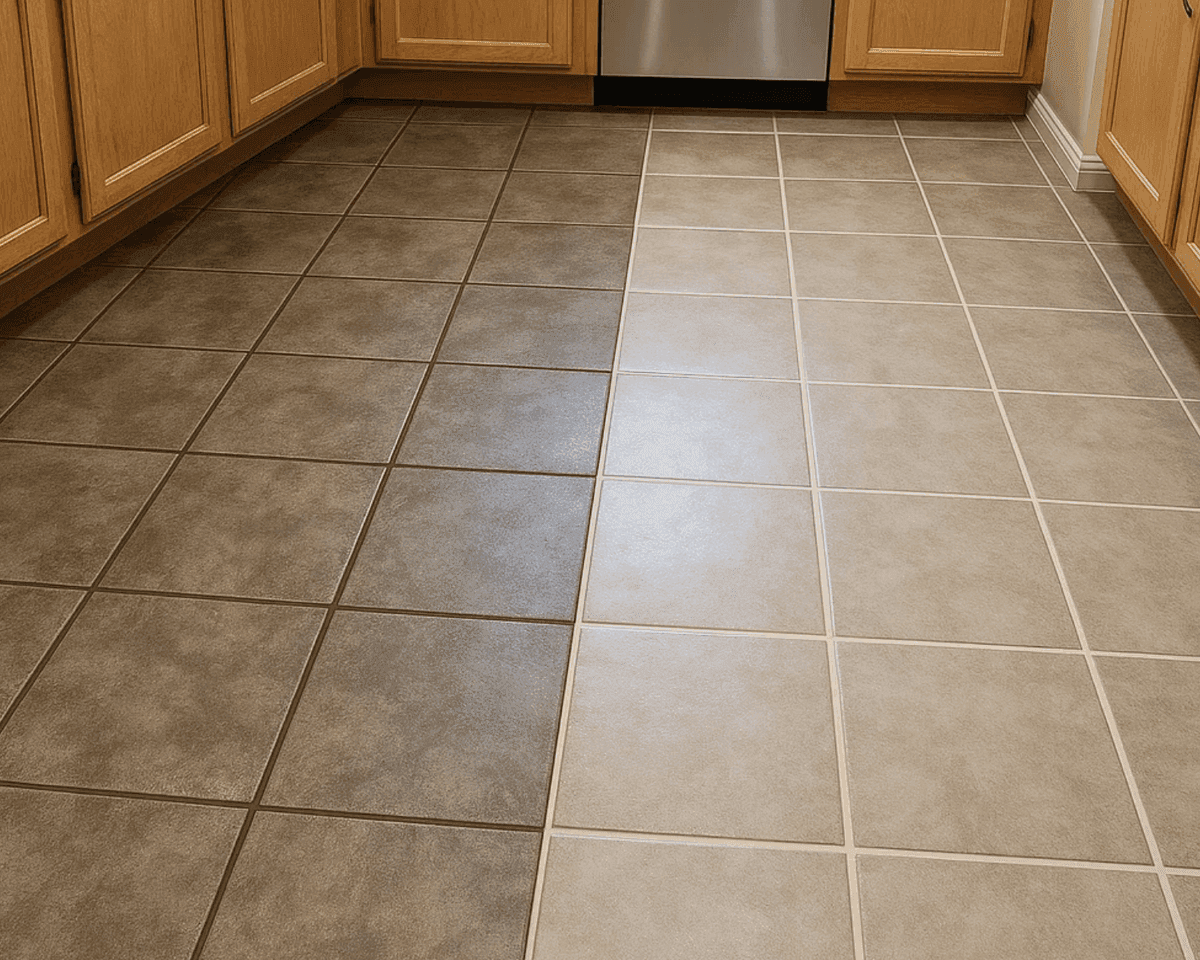
The tile looks fine. It is the grout that tells the real story. Those thin lines between your kitchen tiles, your bathroom floor, the entryway where everyone walks in from the garage — they started one color and now they are something else entirely. Darker. Uneven. Resistant to every mop and scrub brush you have tried.
That is not because you have been cleaning wrong. Grout is porous. It absorbs everything — cooking grease, soap scum, dirty mop water, foot traffic grime, mildew. Over a few years of daily use, the pores fill up and surface mopping stops reaching the embedded dirt. At that point, you are just pushing clean water across a surface that cannot absorb anything more.
Professional tile and grout cleaning reaches what your mop cannot. We scrub the embedded grime out of the pores of the grout with a weighted floor buffer and restore the lines to something close to their original color. For Grovetown homeowners who have been staring at discolored grout for years thinking the only fix was re-grouting, this is usually a much easier and cheaper solution.
Why grout gets so dirty
Grout is a mixture of cement, sand, and water. Even after it cures, it remains porous — full of microscopic channels that absorb liquids and fine particles. Sealed grout resists absorption for a few years, but sealer wears off over time, especially in high-traffic and high-moisture areas.
Once the sealer is gone, every mop pass pushes dirty water into those channels. Kitchen grout absorbs cooking grease and food oils. Bathroom grout absorbs soap scum and body oils. Entryway grout absorbs the red clay mud tracked in from every Grovetown backyard. The grout essentially becomes a sponge that collects dirt but never releases it.
This is why the grout in your kitchen looks darker than the day it was installed — and why scrubbing with a brush and bleach only helps temporarily. You are cleaning the surface of the grout, but the discoloration is inside the pores.
The 6-step tile and grout cleaning process
1. Assessment. We evaluate the tile type (ceramic, porcelain, natural stone), the grout condition, the sealer status, and the severity of the discoloration. Natural stone requires non-acidic products, so identifying the material before we start prevents damage.
2. Dry sweep and prep. Loose debris, dust, and surface dirt are cleared so the cleaning solution can make direct contact with the grout and tile surface. We also move lightweight items from the area — bathroom mats, trash cans, small furniture.
3. Pre-treatment application. A cleaning solution appropriate for the tile and grout type is applied and allowed to dwell. This breaks up the surface-level grime and begins loosening the embedded soil in the grout pores. Heavy grease areas like kitchen floors get a degreasing formulation. Bathroom floors with soap scum buildup get an alkaline treatment.
4. Buffer agitation. A rotary floor buffer works the solution into the grout lines, and its brush breaks the bond between the embedded dirt and the pore walls. The bristles settle into the recessed joint as the machine turns, which is why this step reaches dirt that mopping and hand scrubbing cannot touch. On textured tile, the same pass lifts soil from the tile surface itself.
5. Rinse and mop-up. Clean rinse water goes down over the whole area, then comes back up with the mop, carrying the loosened grime and spent solution along with it. This clears everything the pre-treatment and agitation broke free before any of it can settle back into the joint.
6. Final walkthrough. We check the floor with you line by line once it has been mopped. If a stubborn section needs another pass with the buffer, it gets one before we pack up.
Common tile situations in Grovetown homes
Kitchen floors with years of cooking grease. This is the single most common tile and grout cleaning request we handle. Kitchen grout absorbs aerosolized cooking oil, food spills, and the film that accumulates from daily use. Even households that mop twice a week end up with grout that darkens progressively. One cleaning session usually restores it to something close to original.
Bathroom floors with soap scum and mildew. Bathroom tile sits in a high-moisture environment every day. Soap residue, body oils, and mineral deposits from Grovetown's municipal water supply build up in the grout. Add mildew — which thrives in the warm, damp conditions of a Columbia County summer — and you get grout that looks black even though the original color was white or gray.
Entryway and mudroom tile. The tile inside your front door or garage entry absorbs the worst of what gets tracked in. Georgia red clay is iron-rich and stains aggressively, especially in unsealed grout. A lot of Grovetown homes have tile entryways specifically because they handle traffic better than carpet — but the grout between those tiles needs periodic attention.
Shower walls and floor. Shower tile and grout face the toughest conditions in the house — daily water exposure, soap, shampoo, body oils, and warm temperatures that encourage mildew growth. A professional cleaning can transform a shower that looks permanently stained.
New-construction homes with builder-grade grout. Many of the newer subdivisions in Grovetown — Canterbury Farms, Brookstone, Euchee Creek — were built with standard builder-grade grout that was not sealed at installation. If your home is five to ten years old and the grout has never been sealed, that is probably why it looks so much worse than the day you moved in.
Each of these rooms fails in its own way, and Safe-Dry publishes a national tile site that walks through what causes grout discoloration in every one of them. It also covers shower tile, floor haze, and the practical differences between porcelain and ceramic, all in plain language.
Natural stone tile
We clean travertine, slate, limestone, and other natural stone tiles. These require non-acidic products — acidic cleaners etch the surface of natural stone, creating a dull, rough texture that is permanent. Our products are pH-appropriate for each stone type.
Marble is a special case. It is softer than most other natural stone and extremely sensitive to acidic products, including many common household cleaners. Call and describe what you have — we will talk through whether our process is a fit for your specific marble before booking.
How often should tile and grout be professionally cleaned
Every twelve to eighteen months for most Grovetown homes. Kitchens with heavy cooking use and bathrooms with daily shower traffic may benefit from more frequent attention. The signal is usually visual — when mopping stops getting the grout clean and the lines stay dark regardless of how hard you scrub, it is time. Wiping spills quickly and sweeping up the red clay grit before it gets ground in will stretch the interval between visits.
Frequently asked questions
Can you actually get my grout white again? If the grout started white and has darkened from years of accumulated grime, yes — we usually restore it close to original. If it was always a gray or tan color, we clean it to its true shade, but we cannot change what was installed.
Do you clean natural stone? Travertine, slate, and limestone — yes, with non-acidic products. Marble is a case-by-case conversation. Call and we will talk through whether your specific stone is a fit.
How long does a tile job take? A standard kitchen and one bathroom runs about ninety minutes to two hours. A whole main level of tile in a larger home is closer to half a day. You can walk on it as soon as we finish.
What kind of machine do you use? A rotary floor buffer fitted with a scrubbing brush. It spins the cleaning solution down into the grout joints, the reach a mop simply lacks, and there is no high-pressure spray involved, so baseboards and cabinets stay dry.
How much does it cost? Pricing is based on square footage and the condition of the grout. Call 803-310-3848 and describe the space — kitchen size, number of bathrooms, and how bad the grout looks gives us enough for a range.