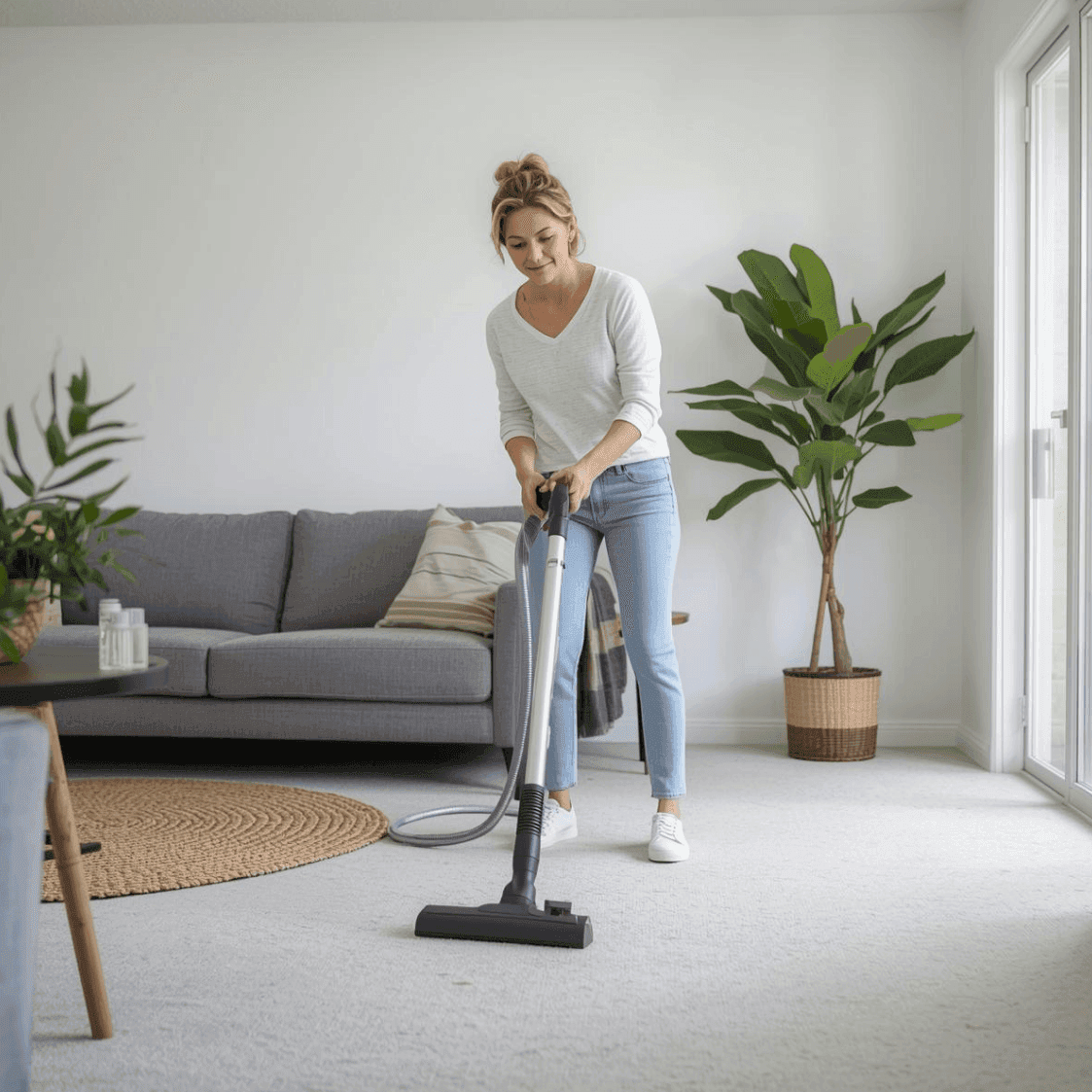
Carpet cleaning removes the dirt, stains, and oils you can see. What it does not automatically eliminate are the microscopic organisms living in the fibers — dust mites, bacteria, mold spores, and the microbes responsible for persistent odors. These are too small to extract mechanically, and they repopulate quickly in the warm, humid conditions that Grovetown experiences for most of the year.
Our antibacterial sanitizer is a post-cleaning treatment applied after the carpet or upholstery has already been cleaned. It targets what cleaning alone leaves behind — the biological layer that lives in soft fibers and affects indoor air quality, allergy symptoms, and overall hygiene.
This is not a standalone service. It is an add-on to a carpet cleaning, upholstery cleaning, or area rug cleaning visit. Sanitizing a dirty surface does not accomplish much — the organic material on top would prevent the sanitizer from reaching the fibers. The cleaning has to happen first.
What the sanitizer actually does
The antibacterial treatment is designed to reduce the population of bacteria, dust mites, and odor-causing microbes that live in carpet and upholstery fibers. Here is what that means in practical terms.
Dust mite reduction. Dust mites are microscopic arachnids that feed on dead skin cells in carpet, upholstery, mattresses, and pillows. Their waste products are one of the most common household allergens. A single square yard of carpet can host tens of thousands of dust mites. The sanitizer reduces their population and makes the treated surface less hospitable to re-colonization.
Bacterial count reduction. Carpet and upholstery harbor bacteria from shoes, pet paws, food contact, body oils, and general household traffic. The sanitizer reduces bacterial counts on treated surfaces, which is particularly relevant in homes with infants who crawl on the floor, elderly residents with compromised immune systems, or anyone recovering from illness.
Odor-causing microbe treatment. Some carpet odors are not caused by stains or pet accidents — they are caused by microbial activity in the fibers. Bacteria that feed on organic material in the carpet produce volatile compounds that smell musty, sour, or stale. The sanitizer targets these organisms and reduces the odor they produce.
The 6-step sanitizer application process
1. Prerequisite cleaning. The carpet or upholstery must be professionally cleaned first. The sanitizer is applied to a clean surface so it can penetrate the fibers and make contact with the organisms living at the base of the pile. Applying sanitizer on top of dirt is ineffective.
2. Surface confirmation. After cleaning, we verify that the carpet is in the right condition for treatment — clean, slightly damp, and free of any remaining cleaning solution. The sanitizer works best when it can bond directly to the fiber.
3. Even application. The sanitizer is applied uniformly across the treated area using a controlled mist. We work methodically to ensure full coverage — skipping areas defeats the purpose, since dust mites and bacteria are distributed throughout the carpet, not concentrated in one spot.
4. Fiber penetration. The formula is designed to wick into the carpet pile and reach the base of the fibers where dust mites and bacteria are most concentrated. Surface-only application would miss the majority of the target organisms.
5. Dwell period. The sanitizer needs approximately thirty minutes to fully activate and bond to the fibers. During this time, it is working to reduce microbial populations and create conditions that inhibit re-colonization.
6. Drying. The treated area dries within about thirty minutes. Once dry, there is no residue, no odor, and no chemical film. The carpet feels the same as it did after cleaning — the sanitizer does not change the texture or appearance of the fiber.
Who benefits most from the sanitizer
Not every household needs this add-on. For a home with no pets, no young children, and no allergy sufferers, regular professional cleaning on an annual basis handles the hygiene aspect adequately. But certain situations make the sanitizer worth the additional investment.
Allergy and asthma households. If someone in your home has dust mite allergies, seasonal allergies, or asthma, the carpet is one of the largest allergen reservoirs in the house. Combining professional cleaning with the sanitizer significantly reduces the dust mite population and allergen load. In Columbia County, where pollen season runs from March through May and humidity keeps dust mite populations high year-round, this is a meaningful intervention.
Homes with infants and crawling babies. Babies spend a lot of time on the floor, and their faces are right against the carpet fibers. They are also more susceptible to bacterial infections than older children and adults. The sanitizer reduces the bacterial count on the surface they are in the most contact with.
Pet households. Dogs and cats carry bacteria on their paws and bodies and transfer it to every soft surface in the house. Homes with multiple pets have higher microbial loads in their carpet and upholstery. The sanitizer complements the cleaning by addressing the biological component.
Post-illness cleaning. After a household illness — flu, stomach bug, anything contagious that had people spending time on the couch and walking across the carpet — the sanitizer provides an additional layer of treatment beyond regular cleaning.
Military housing turnovers. Families moving into a home near Fort Eisenhower where the previous occupant's hygiene standards are unknown sometimes want the assurance that the soft surfaces have been both cleaned and sanitized. It is peace of mind at a reasonable price.
What the sanitizer does not do
It is important to set accurate expectations. The antibacterial sanitizer is not a magic shield that makes your carpet permanently germ-free. Here is what it does not do:
- It does not replace cleaning. The cleaning removes soil, stains, and physical contaminants. The sanitizer targets the biological organisms that remain.
- It does not last forever. The antimicrobial effect diminishes over time as new soil and biological material accumulate. Reapplying at each cleaning visit (typically every six to twelve months) maintains the benefit.
- It does not eliminate all bacteria. It reduces counts significantly, but no treatment short of sterilization eliminates one hundred percent of microorganisms — and sterilization is neither practical nor desirable in a household environment.
- It does not address structural odors. If the carpet has pet urine contamination in the pad, the sanitizer will not fix that. The pet odor treatment is the right service for that problem.
Frequently asked questions
What does the sanitizer actually do? It reduces bacteria, dust mites, and odor-causing microbes in carpet and upholstery fibers. It is applied after cleaning as a second layer of treatment targeting what mechanical cleaning cannot remove.
Is it safe around kids and pets? Yes. The formula is non-toxic and safe once dry, which takes about thirty minutes. No residue, no strong smell, no off-gassing.
Do I have to get it with a cleaning, or can I book it alone? It is designed as an add-on to a cleaning. Sanitizing a dirty surface does not accomplish much — the cleaning needs to happen first so the sanitizer can reach the fibers.
How long does the effect last? The antimicrobial benefit diminishes as new soil accumulates. Reapplying at each cleaning visit — typically every six to twelve months — keeps the protection active.
Is this worth it for someone with allergies? Often, yes. Dust mites and their waste are among the most common household allergens, and they live in carpet fibers. Combined with regular professional cleaning, the sanitizer makes a measurable difference for people with respiratory sensitivity. In Grovetown's humid climate, where dust mite populations thrive, the benefit is more pronounced than it would be in a drier region.
How much does it add to the cost? The sanitizer is priced as a per-room add-on to your cleaning visit. Call 803-310-3848 for current pricing. Most customers who try it once make it a standard part of their cleaning rotation.