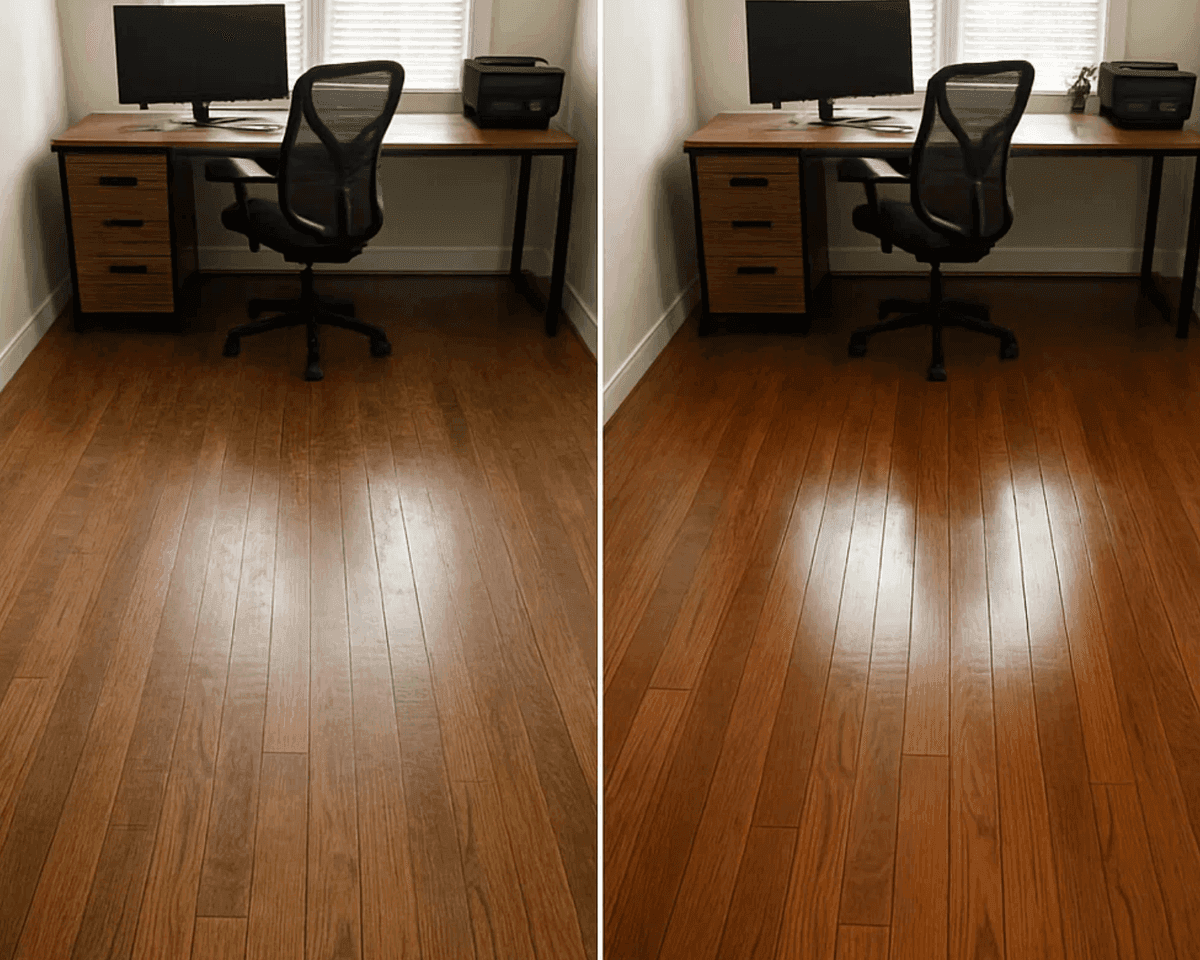
Hardwood floors look great the day they go in. Five years later, they have a haze. The color looks muted. High-traffic areas have a dull, scuffed appearance that sweeping and Swiffer pads never quite resolve. What happened is simple — a film of fine grit, body oils, cleaning product residue, and household dust has built up on the finish, and everyday cleaning methods just push it around.
The fix is not refinishing. Refinishing is a last resort for floors where the finish itself is worn through or the wood is scratched deep enough to need sanding. For the majority of hardwood floors in Grovetown, a professional cleaning removes the buildup and restores the natural luster without touching the finish or the wood underneath.
Our process uses very little moisture, a pH-neutral cleaning solution, and no harsh chemicals. The floor is barely damp during the cleaning and dries within minutes. No flooding the joints, no risk to the finish, no warping, no need to vacate the house.
Why hardwood floors need more than sweeping
Sweeping picks up loose dirt. Dust-mopping catches fine particles. A damp mop with wood floor cleaner removes surface scuffs. All of these are good maintenance habits. But none of them reach the film that accumulates on the finish over months and years.
That film is a combination of several things:
Fine grit. Microscopic dirt particles that are too small for sweeping to catch but large enough to scratch the finish over time. They settle into the micro-texture of the polyurethane and create a matte, worn appearance even on floors that have not actually been worn through.
Cleaning product residue. Most commercial hardwood floor sprays leave behind a thin layer of ingredients that builds up with each application. The floor looks good right after mopping, but two days later it is dull again — and slightly duller than before, because the residue layer just got thicker.
Body and cooking oils. Kitchen floors and hallways accumulate a light oil film from bare feet, cooking aerosols, and food contact. Over time, this attracts dust and bonds it to the finish, creating a sticky-ish layer that traps everything that lands on it.
Georgia red clay dust. In Grovetown, the fine particulate from red clay soil finds its way indoors even if nobody tracks in visible mud. It settles on horizontal surfaces, including the floor, and works its way into the finish where it creates a reddish haze that dulls the wood's natural color.
A professional cleaning strips all of this away and lets the actual finish show through again.
The 6-step hardwood floor cleaning process
1. Assessment. We identify the finish type — polyurethane, aluminum oxide, oil-rubbed, wax, or lacquer — because each one responds differently to moisture and cleaning chemistry. We also check for areas of finish failure, deep scratches, or water damage that might need special handling.
2. Dry debris removal. All loose dirt, dust, and particulates are removed before any liquid touches the floor. This prevents us from grinding grit into the finish during the cleaning pass. For textured or hand-scraped hardwood, this step is especially important because debris hides in the grain pattern.
3. Pre-treatment of heavy soil areas. Kitchen floors, entryways, and high-traffic hallways often have heavier buildup than the rest of the house. These areas get a targeted pre-spray that softens the accumulated film so it releases more effectively during the main cleaning.
4. Low-moisture cleaning. A pH-neutral solution is applied in a controlled, minimal volume and worked across the floor with microfiber pads. The solution dissolves the film, releases embedded fine grit, and lifts oils without saturating the wood or the joints between planks. The floor is barely damp — there is no pooling, no dripping, and no standing water at any point.
5. Extraction. As the solution dissolves the buildup, clean microfiber pads absorb everything that has been loosened. This is where you see the results — the pads come up brown or gray from floors that looked clean to the eye. What they have collected is the invisible film that was dulling the finish.
6. Buffing and drying. A final pass restores the even sheen across the floor. Dry time is minutes, not hours. You can walk on the floor immediately with normal footwear. No residue, no sticky feeling, no chemical smell.
What types of hardwood we clean
Our method works on the full range of hardwood flooring found in Grovetown homes:
- Prefinished hardwood — factory-finished with a durable aluminum oxide or polyurethane coating. The most common type in homes built in the last fifteen years, including most of the newer Columbia County subdivisions.
- Site-finished hardwood — stained and finished on-site after installation. Common in older homes and custom builds. The finish is usually polyurethane or lacquer.
- Engineered hardwood — a real wood veneer over a plywood or HDF core. We treat it the same as solid hardwood, with attention to the thinner wear layer.
- Hand-scraped and distressed — textured surfaces that require extra care during the debris removal phase to clear particles from the grain pattern.
- Oil-rubbed and wax finishes — these are less common but require specific products that will not strip the oil or wax. We identify the finish during assessment and adjust accordingly.
What we do not do: Refinishing, sanding, and stain application are different trades. If your floor needs a full refinish, that is a hardwood flooring contractor's job. What we do is clean and restore the existing finish — which, for most floors, is all that is actually needed.
Common hardwood issues in Grovetown homes
New-construction dullness. A lot of the newer homes in Canterbury Farms, Brookstone, and the other Grovetown subdivisions have prefinished hardwood in the main living areas. After five to seven years of daily traffic, the floors develop a haze that homeowners sometimes mistake for finish failure. It is usually just buildup. A single professional cleaning restores the factory appearance.
Kitchen floor film. Cooking aerosols settle on the kitchen floor every time you use the stove. Combined with foot traffic and cleaning product residue, the kitchen floor is almost always the most visibly dulled hardwood in the house. One cleaning makes a dramatic difference.
Entryway grit damage. The entryway takes the heaviest grit load in the house, especially in homes with red clay yards. Fine particulates act like sandpaper under foot traffic, creating micro-scratches in the finish that give the floor a worn look. Regular cleaning removes the grit before it causes more damage.
Post-renovation dust. If you have done any construction or renovation work in the house, the fine dust from drywall, sanding, and demo settles everywhere — including into the hardwood floor finish. A professional cleaning after a renovation removes that film and restores the floor's pre-project appearance.
How often should hardwood floors be professionally cleaned
Every twelve to eighteen months for most homes. Kitchens and high-traffic entryways benefit from more frequent attention — every six to nine months if the traffic is heavy.
Between professional cleanings, the best maintenance routine is straightforward: sweep or dust-mop regularly, avoid wet-mopping with excess water, and use a manufacturer-recommended cleaning spray sparingly. The less product you put on the floor between professional cleanings, the less buildup accumulates.
Frequently asked questions
Is this safe for my hardwood finish? Yes. The process is specifically designed for finished wood — low moisture, pH-neutral cleaner, no flooding. The floor is barely damp during cleaning and dries within minutes.
Does it work on engineered and prefinished floors? Yes. Prefinished, site-finished, and engineered hardwood all work. We adjust technique based on the finish type, but the core process is the same.
Will it fix scratches? The cleaning removes the grime and film that make scratches more visible, so the floor improves visually. For scratches that are gouged into the wood itself, that is a refinishing job — a different service from a different provider.
Can I walk on it right away? Yes. Normal foot traffic is fine the moment we finish. No residue, no slippery spots, no waiting period.
How much does it cost? Pricing is based on square footage. Call 803-310-3848 with approximate room sizes and we can give you a range. Most homes run less than you would expect — especially compared to the cost of refinishing.
What the visit actually looks like
If the six steps above feel abstract, our hardwood specialists wrote a fuller walkthrough of what happens during a professional hardwood floor cleaning, including how much moisture is actually involved and why the buildup removal step does most of the visible work. Useful reading before a first appointment.